Glass vs. Stainless Steel Food Storage Containers for Weekly Meal Prep
Comparing borosilicate glass containers and lightweight 18/8 stainless steel food boxes for fridge visibility, lunch commuting, and tomato-sauce stain resistance.

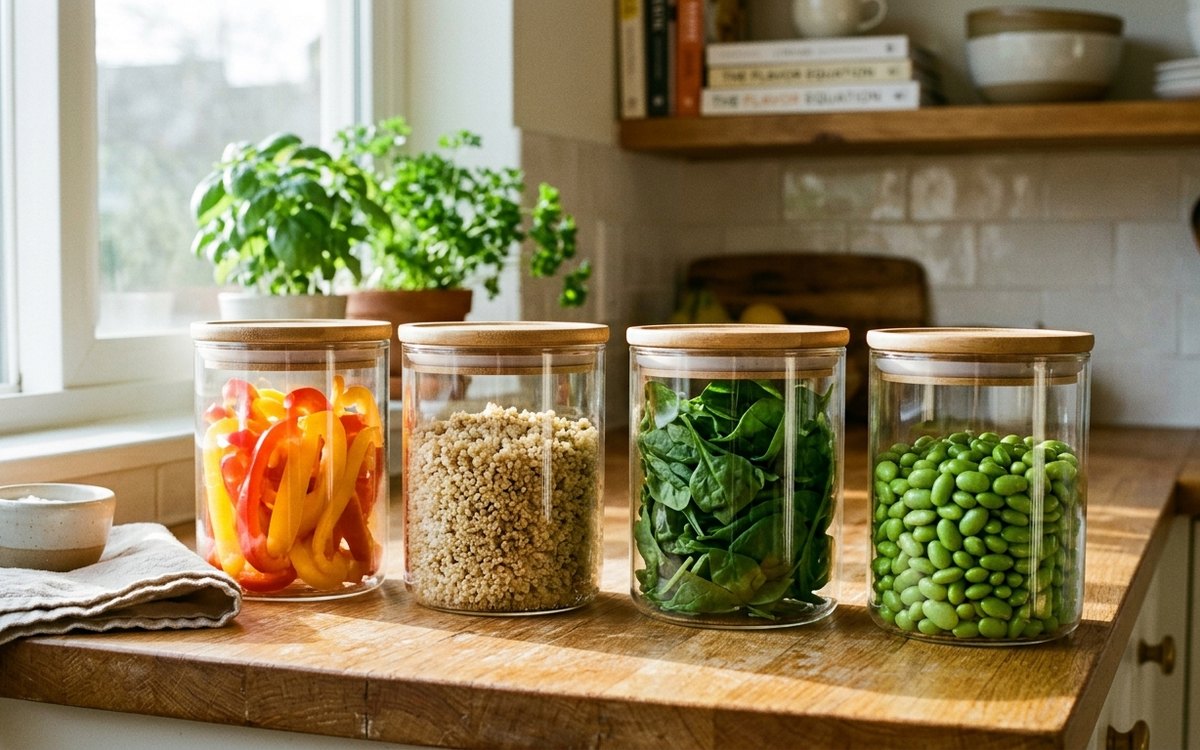
Choose oven-safe borosilicate glass with four-hinge locking silicone seals for fridge visibility and microwave reheating, or switch to lightweight 18/8 stainless steel containers for packed backpacks and school lunchboxes.
Fridge Visibility vs. Portability: Two Real-Life Routines
Most households run better with a split system rather than forcing one material into every role. Clear borosilicate glass dominates refrigerator batch prep because seeing roasted chicken or sliced fruit prevents forgotten food waste. Meanwhile, steel shines on tile floors, playgrounds, and train commutes where chipped glass rims become a hazard.
Checking Gasket Maintenance Before You Buy
Any container labeled airtight uses an elastomer seal tucked inside its lid groove. Smooth-channel lids where the silicone ring lifts cleanly with a butter knife stay sanitary far longer than permanently bonded grooves that trap moisture.
Recommended Product Comparisons & Tradeoffs
Prep Naturals Borosilicate Glass Meal Prep Containers (5-Pack)
Key Specifications (Published Features)
- Thermal-shock-resistant borosilicate glass body safe up to 450°F without lid
- Removable silicone gasket inside BPA-free four-tab locking lid
- Uniform 36 oz rectangular footprint for tidy fridge stacking
Where It Fits Best
- Zero tomato sauce or curry staining and zero lingering garlic aroma
- Transparent glass walls show pantry or fridge leftovers at a glance
- Reheats safely inside microwave or countertop toaster ovens (lids removed)
Tradeoffs to Consider
- Significantly heavier in commuter bags than plastic or metal
- Removable lid gaskets need periodic popping out to scrub cleanly
LunchBots Leakproof 18/8 Stainless Steel Bento & Storage Container
Key Specifications (Published Features)
- Constructed from 18/8 food-grade 304 stainless steel base and cover
- Lightweight compact profile built to survive accidental floor drops
- Dishwasher-safe finish free of enamel or plastic interior linings
Where It Fits Best
- Fraction of the weight of glass in a tote bag or backpack
- Resists dents, cracking, and brittle freezer hinges
- Easy one-piece sanitization on top or bottom dishwasher rack
Tradeoffs to Consider
- Opaque walls require a chalkboard label in crowded household fridges
- Never safe for microwave reheating
Frequently Asked Questions
Can borosilicate glass move directly from freezer to warm oven?
Borosilicate handles mild thermal shifts better than soda-lime glass, though manufacturers still recommend letting frozen dishes sit on the counter for 20–30 minutes before baking at high oven temperatures.
David Miller
Kitchen & Prep Specialist
Claire researches residential textiles, kitchen materials, and functional home storage systems for everyday households. Her buying guides synthesize published manufacturer specifications, material safety certifications, and real-world apartment and family usage scenarios.
Read our editorial standards