Best PTFE-Free Ceramic Cookware Sets for Daily Family Cooking
Comparing ceramic-coated cookware sets by base thickness, induction compatibility, oven limits, and cabinet storage footprints for smooth weekday meal prep.

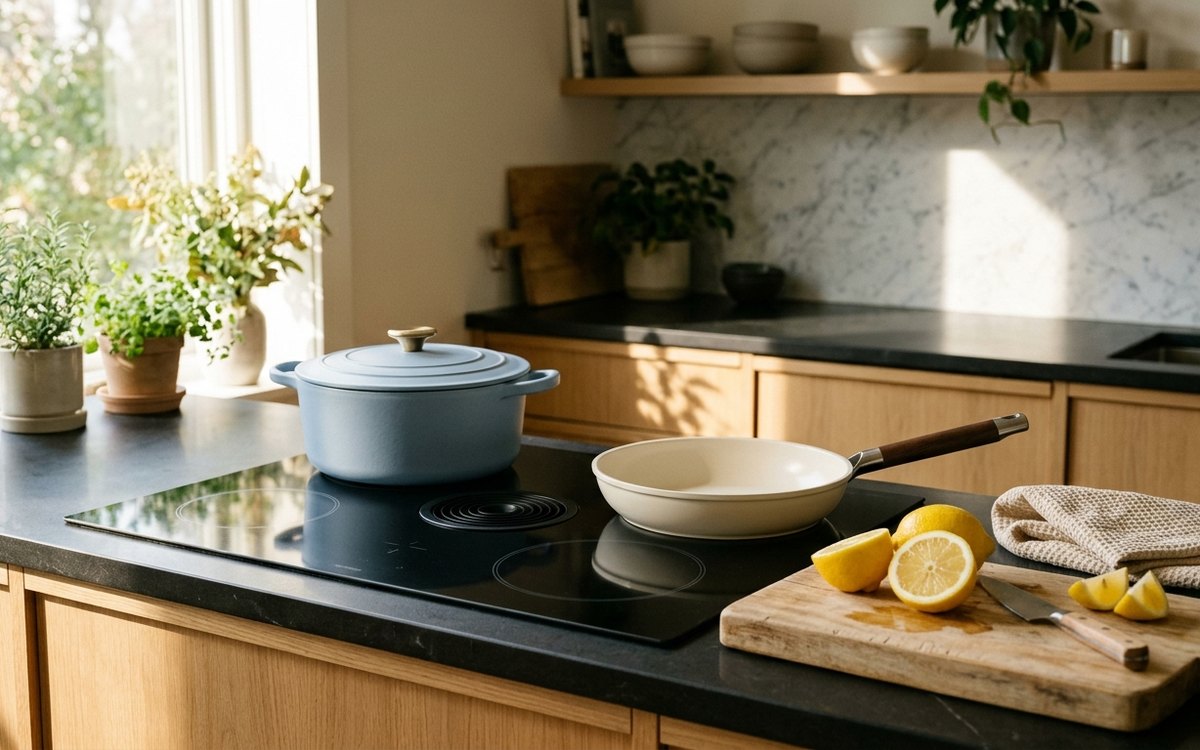
Look for diamond-reinforced ceramic over hard-anodized aluminum if you need durability across heavy weekday skillets, or choose modular magnetic-rack ceramic sets when lower cabinet space is limited.
How Ceramic Coatings Differ From Traditional Nonstick
Conventional nonstick pans rely on fluoropolymer membranes that soften when accidentally left empty over a dry high flame. Modern sol-gel ceramic coatings bond a silica-derived mineral glaze to an aluminum core, avoiding PTFE and PFOA while maintaining low-oil food release for morning eggs, pancakes, and delicate fish fillets.
Matching Pan Gauge & Base Design to Your Stove
Home cooks with glass-top electric or induction ranges benefit most from thick encapsulated stainless bases rather than thin stamped aluminum bottoms. Even 3mm+ construction minimizes edge warping and prevents hot spots that scorch olive oil in the center before batter reaches temperature.
Everyday Care Habits That Preserve Slick Release
Based on manufacturer care guidelines across leading ceramic lines, three daily habits make the biggest difference: avoid aerosol propellants that leave gummy polymerized films, preheat on low-to-medium for 45 seconds before adding butter or high-smoke-point avocado oil, and allow pans to cool on the range before rinsing under tap water.
Recommended Product Comparisons & Tradeoffs
GreenPan Valencia Pro Hard Anodized Ceramic Nonstick 11-Piece Set
Key Specifications (Published Features)
- Thermolon Minerals Pro ceramic nonstick coating made without PFAS, PFOA, lead, or cadmium
- Hard-anodized aluminum bodies with Magneto induction-ready bases
- Stainless steel handles oven safe up to 600°F (glass lids safe up to 425°F)
Where It Fits Best
- Compatible with gas, electric, ceramic glass, and induction cooktops
- Heavier anodized gauge resists warping over uneven burner rings
- Permits light dishwasher cycles without immediate finish breakdown
Tradeoffs to Consider
- Skillets feel heavier for one-handed flipping compared to stamped aluminum
- Lids have a lower oven ceiling than the pans themselves
Caraway Home Mineral-Coated Ceramic Cookware 12-Piece Set
Key Specifications (Published Features)
- Mineral silica nonstick interior free of PTFE and fluoropolymers
- Aluminum core paired with stainless steel induction base plate
- Includes magnetic pan racks and canvas lid organizer sleeves
Where It Fits Best
- Solves skillet scratching caused by stacked nesting inside narrow base cabinets
- Deep sauté pan geometry fits one-pot family pasta and simmer sauces cleanly
- Smooth exterior ceramic glaze wipes clean easily after stovetop splatters
Tradeoffs to Consider
- Requires low-to-medium heat habits and soft sponge hand washing
- Stainless steel handles warm slightly during extended oven braises
Frequently Asked Questions
How long does ceramic nonstick coating typically stay slick?
Coatings last longest when reserved for eggs, crepes, and light sautés at low-to-medium temperatures paired with silicone or wood utensils, whereas high-heat searing is better handled by cast iron or stainless steel.
Can you use extra virgin olive oil or butter in ceramic skillets?
Yes. Standard butter, avocado oil, and extra virgin olive oil release cleanly on ceramic glazes. Aerosol cooking sprays are the main culprit behind premature sticky residue build-up.
Claire Bennett
Managing Editor & Home Goods Researcher
Claire researches residential textiles, kitchen materials, and functional home storage systems for everyday households. Her buying guides synthesize published manufacturer specifications, material safety certifications, and real-world apartment and family usage scenarios.
Read our editorial standards