Wood Cutting Boards Compared: End-Grain Maple, Acacia & Teak for Daily Prep
Comparing natural resinous teak, classic sugar maple butcher blocks, juice-groove ergonomics, and board oiling schedules to keep chef knives sharp.

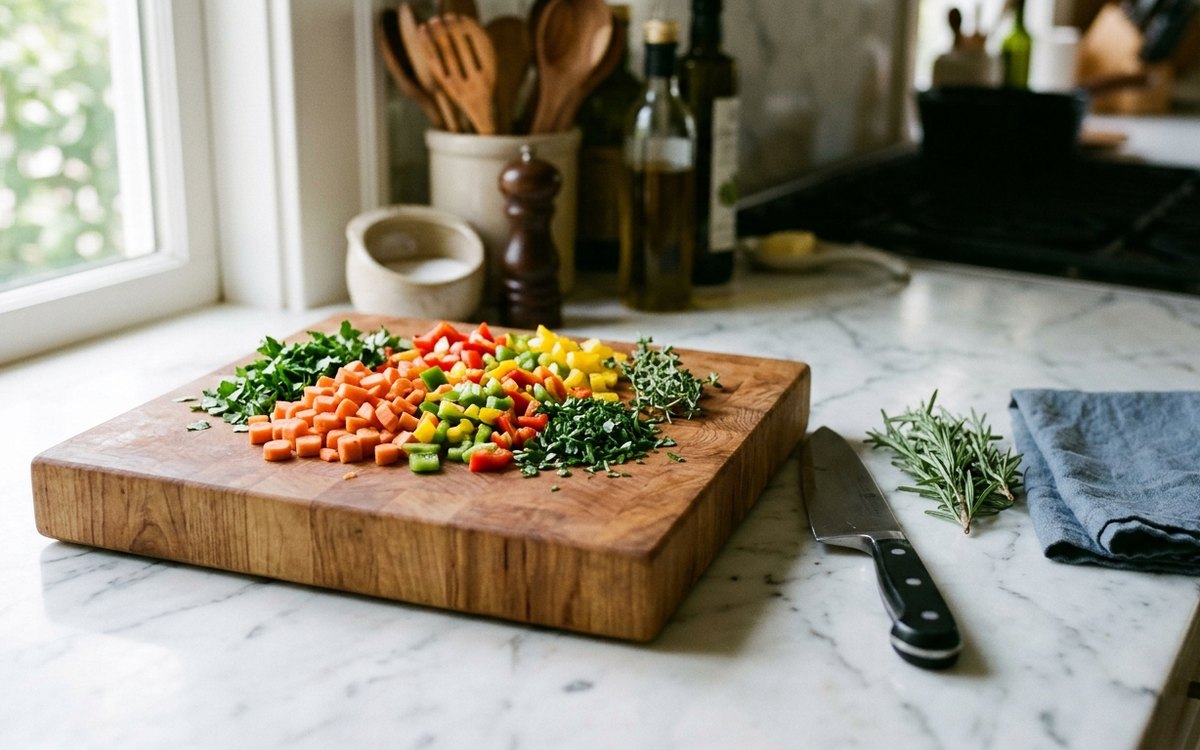
Choose edge-grain kiln-dried teak for lighter moisture resistance and low oiling hassle, or step up to a 1.75-inch thick end-grain hard maple board if preserving high-carbon kitchen knives is your top priority.
Why Thick Wood Outperforms Soft Plastic Boards
Polyethylene cutting boards accumulate deep knife scars that catch damp vegetable fibers and shed fine shavings over years of chopping. Properly oiled hardwood compresses smoothly under a keen blade edge and seals tight again as surface fibers relax.
Avoiding Warped & Cracked Lumber
Never submerge wood boards in soapy dishwater or stand them flat in wet sink puddles. Wipe both top and bottom lightly with a damp soapy sponge, rinse quickly, towel dry, and prop the board vertically on its long edge so air circulates evenly across both faces.
Recommended Product Comparisons & Tradeoffs
Teakhaus Edge-Grain Rectangular Cutting Board With Hand Grips
Key Specifications (Published Features)
- FSC-certified sustainably harvested teak with high natural silica and oils
- Dual carved side grip cutouts for easy countertop lifting
- Spacious 20 × 15 inch prep zone with perimeter juice channel
Where It Fits Best
- Resists kitchen sink splash warping better than lighter dry hardwoods
- Light enough to rinse over a standard residential basin sink daily
- Warm honey grain doubles nicely as a weekend serving platter
Tradeoffs to Consider
- Natural silica content wears down thin Japanese steel slightly faster than maple
- Still requires hand washing and standing upright to dry cleanly
John Boos Block Reversible Northern Hard Maple Board (1.5-Inch)
Key Specifications (Published Features)
- Kiln-dried North American Northern Hard Rock Maple
- NSF food-service approved construction with recessed side grips
- Smooth edge-grain reversible surfaces without plastic coatings
Where It Fits Best
- Closed maple grain softens blade impact and resists bacterial harboring
- Flat reversible sides maximize chopping space without narrow channels
- Heavy footprint never slides across stone counters when dicing dense squash
Tradeoffs to Consider
- Needs monthly food-grade mineral oil + beeswax conditioning
- Heavier weight makes tight apartment sink rinsing less convenient
Frequently Asked Questions
Can you put vegetable oil or olive oil on a wooden cutting board?
No—cooking oils oxidize and go rancid sticky inside wood pores. Use only USP food-grade liquid mineral oil or board cream blended with natural beeswax.
Claire Bennett
Managing Editor & Home Goods Researcher
Claire researches residential textiles, kitchen materials, and functional home storage systems for everyday households. Her buying guides synthesize published manufacturer specifications, material safety certifications, and real-world apartment and family usage scenarios.
Read our editorial standards